Discover Cote D’Ivoire
Côte d’Ivoire blends energetic modern cities with longstanding cultural traditions and remarkable ethnic diversity. From Abidjan to communities across its forests and savannas, Ivorian identity is colourful, creative and distinctly West African.
Cote D’Ivoire at a Glance
Capital
Yamoussoukro
Largest City
Abidjan
Region
West Africa
Currency
CFA Franc
Independence
Aug 7, 1960
Official Language
French
The Meaning behind the Flag
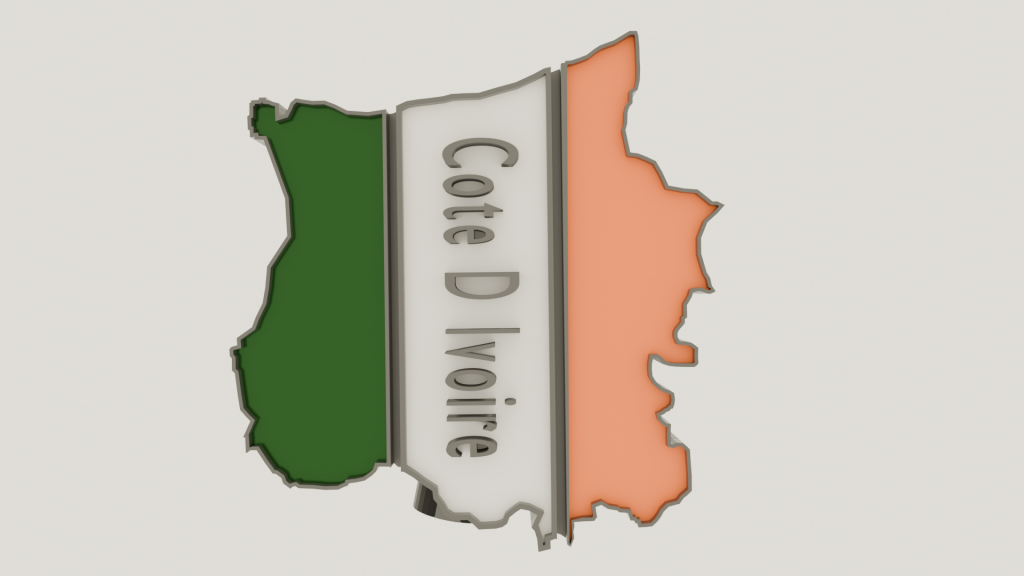
Orange represents the northern savannas and the land, white represents peace and unity, and green represents the forests of the south and hope for the future.
A Little History
The lands of modern Côte d’Ivoire have long been home to diverse West African communities connected through trade, migration and powerful neighboring kingdoms. Different regions developed their own political systems, while trade routes connected the interior with the wider Sahel and Atlantic coast.
Several important states emerged in the region. In the northeast, the Kong Empire became an influential commercial center from the 18th century, linking merchants and communities across West Africa. In the east, Akan-speaking peoples established kingdoms connected culturally and commercially with neighboring areas of present-day Ghana.
European traders began visiting the coast from the 15th century, initially seeking commodities such as ivory and gold. French influence expanded during the 19th century through trading posts, treaties and military campaigns.
France formally established Côte d’Ivoire as a colony in 1893, and it later became part of French West Africa. Colonial authorities expanded export agriculture, infrastructure and forced-labour systems, transforming the country’s economy.
During the mid-20th century, political movements increasingly pushed for African representation and self-government. Félix Houphouët-Boigny emerged as the country’s most influential independence-era political leader.
Côte d’Ivoire gained independence from France on August 7, 1960, with Houphouët-Boigny becoming its first president. The country subsequently became one of the world’s leading producers of cocoa, which remains an important part of its economy today.
People & Culture
Côte d’Ivoire is one of West Africa’s most culturally diverse countries, with dozens of ethnic communities and languages. These are often broadly associated with groups including Akan, Mandé, Gur and Kru peoples, although each contains many distinct communities with their own histories and traditions.
Among them are the Baoulé, Agni, Sénoufo, Malinké, Dan and Bété, among many others. French is the official language, while numerous local languages are spoken throughout the country.
Traditional masks and masquerades hold important cultural and spiritual significance among several Ivorian communities. Rather than being simply decorative objects, masks may be associated with ceremonies, community traditions, ancestors, social institutions and important occasions.
The country also has strong traditions of wood carving, weaving, pottery, dance and textile production. Different regions have developed distinctive artistic styles that have been passed between generations.
Family and community relationships remain important parts of everyday life. Christianity and Islam are both widely practiced, alongside indigenous religious traditions, producing a culturally and religiously diverse society.
Modern cities—particularly Abidjan—bring together people from across Côte d’Ivoire and neighboring West African countries. Contemporary fashion, art and popular culture exist alongside longstanding traditions, giving modern Ivorian culture both local roots and a strongly cosmopolitan character.
Food
Ivorian cuisine reflects the country’s tropical environment and cultural diversity. Common ingredients include cassava, plantain, rice, yam, maize, peanuts, vegetables, fish and meat, with different dishes particularly associated with different regions and communities.
One of the country’s best-known foods is attiéké, made from fermented and grated cassava. Its light, couscous-like texture makes it a common accompaniment to grilled fish, chicken or meat, often served with onions, tomatoes and spicy sauces.
Alloco, fried ripe plantain, is another extremely popular food. It is commonly eaten as a snack or side dish and can be served with grilled meat, fish, eggs or spicy pepper sauce.
Kedjenou is a slow-cooked stew traditionally prepared with chicken or other meat, vegetables and seasonings. The ingredients cook in their own juices, producing a rich and flavorful dish.
Another popular street food is garba, which combines attiéké with fried tuna, onions, tomatoes and chili. It is particularly associated with inexpensive, filling everyday meals in urban areas.
From roadside vendors in Abidjan to family meals throughout the country, Ivorian food reflects the same diversity found in its people—many regional traditions brought together through shared ingredients, hospitality and community.
Take Cote D’Ivoire With You
Carry a little piece of Cote D’Ivoire wherever you go. Inspired by the country’s iconic orange, green and white, this keychain is a small celebration of Nigerian identity and pride.
Continue Exploring
Your journey doesn’t have to end here. Discover more stories, cultures and heritage from across Africa and the diaspora.