Discover Burkina Faso
Burkina Faso’s name is commonly translated as the “Land of Upright People.” Located in the heart of West Africa, the country carries a strong tradition of community, craftsmanship, resilience and cultural pride.
Burkina Faso at a Glance
Capital
Ouagadougou
Largest City
Ouagadougou
Region
West Africa
Currency
CFA Franc
Independence
Aug 5, 1960
Official Language
English & French are working languages
The Meaning behind the Flag
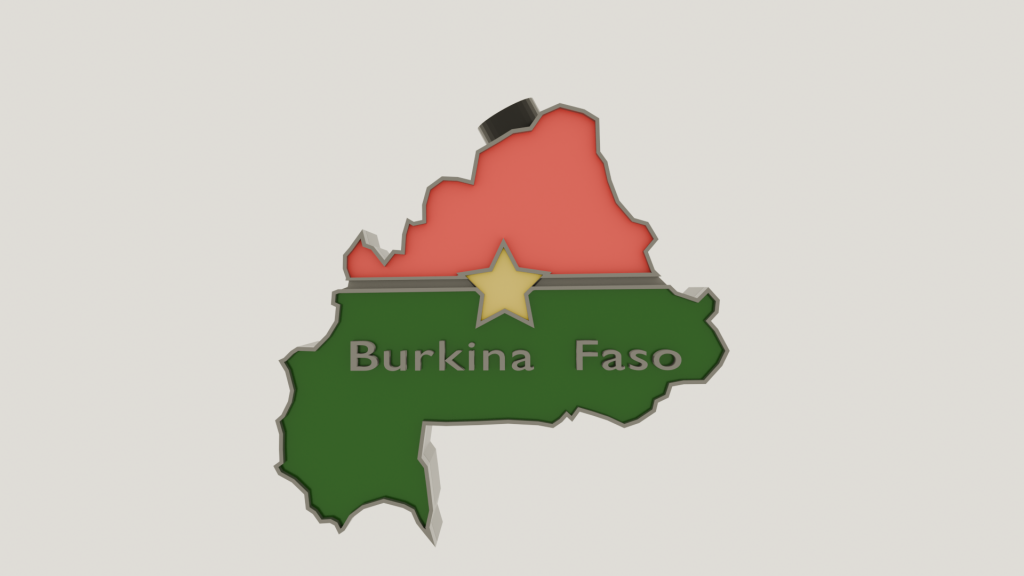
Red represents revolution and sacrifice, while green represents agricultural and natural wealth. The yellow star represents the guiding ideals associated with the country’s revolution.
A Little History
The lands of modern Burkina Faso have a long history of organized states, regional trade and cultural exchange. Among the most influential were the Mossi kingdoms, which developed powerful political systems in the region beginning several centuries ago.
Mossi states such as Ouagadougou, Yatenga and Tenkodogo maintained royal courts, military traditions and systems of government that allowed them to remain influential for centuries. Their rulers, known as Mogho Naba and other royal titles depending on the kingdom, continue to hold important cultural significance today.
During the late 19th century, France expanded into the region and incorporated the territory into its West African colonial empire. The colonial boundaries and administration changed several times before the territory eventually became known as Upper Volta, named after the Volta River system.
Upper Volta achieved independence from France on August 5, 1960, with Maurice Yaméogo becoming the country’s first president. The decades following independence included periods of political instability and military governments.
One of the country’s most influential modern leaders was Thomas Sankara, who became president in 1983. Sankara promoted ambitious programs focused on education, public health, women’s rights, agricultural self-sufficiency and reducing dependence on foreign aid.
In 1984, Sankara changed the country’s name from Upper Volta to Burkina Faso. The name combines words from two major local languages and is commonly translated as “Land of Upright People” or “Land of Incorruptible People.”
Sankara was killed in a 1987 coup, but his political ideas and image continue to have influence in Burkina Faso and across Africa.
People & Culture
Burkina Faso is home to dozens of ethnic and linguistic communities, with the Mossi forming the largest group. Other communities include the Fulani, Bobo, Gurunsi, Senufo, Lobi, Bissa and Gourmantché, among many others.
Many languages are spoken throughout the country. Mooré, associated particularly with the Mossi, is one of the most widely spoken, alongside languages such as Dioula and Fulfulde.
Traditional leadership remains culturally important in many communities. The Mogho Naba, the traditional ruler associated with the historic Mossi kingdom of Ouagadougou, remains a respected cultural institution whose roots extend back centuries.
Burkina Faso also has rich traditions of mask-making and masquerade. Among several communities, masks are connected to ceremonies, spirituality, ancestors, funerals and important community events rather than being created simply as decoration.
Storytelling and oral traditions have helped preserve histories and values across generations. Weaving, pottery, bronze casting, leatherwork, wood carving and textile production also demonstrate the country’s diverse craftsmanship.
Burkina Faso has also developed an important place in contemporary African culture. Its capital, Ouagadougou, is particularly associated with African cinema and hosts FESPACO, one of the continent’s major film festivals.
Food
Burkinabè cuisine reflects the country’s Sahelian environment and agricultural traditions. Common ingredients include millet, sorghum, maize, rice, beans, peanuts, vegetables and livestock products.
One of the most common staples is tô, a firm dough or porridge usually made from millet, sorghum or maize flour. It is typically eaten with a vegetable, okra, peanut or leaf-based sauce.
Riz gras, meaning “fat rice,” is another popular West African dish found in Burkina Faso. Rice is cooked with tomatoes, vegetables and seasonings and may include beef, chicken or other meat.
Grilled meat is also popular, particularly brochettes, pieces of seasoned meat cooked on skewers and commonly sold by street vendors.
Millet and sorghum have been cultivated in the region for generations because they are well suited to the relatively dry Sahelian climate. Peanuts, beans and locally grown vegetables provide important additions to everyday meals.
Food in Burkina Faso is closely tied to family, hospitality and community, with shared meals reflecting the same traditions of cooperation and social connection found throughout the country’s cultural life.
Take Burkina Faso With You
Carry a little piece of Burkina Faso wherever you go. Inspired by the country’s iconic red, green and yellow star, this keychain is a small celebration of Nature identity and pride.
Continue Exploring
Your journey doesn’t have to end here. Discover more stories, cultures and heritage from across Africa and the diaspora.