Discover Cameroon
Cameroon is sometimes called “Africa in miniature” because so much of the continent’s geographic and cultural diversity can be found within its borders. Rainforests, mountains, coastline, grasslands and savannas are home to hundreds of different communities.
Cameroon at a Glance
Capital
Yaounde
Largest City
Douala
Region
Central Africa
Currency
CFA Franc
Independence
January 1, 1960
Official Language
English & French
The Meaning behind the Flag
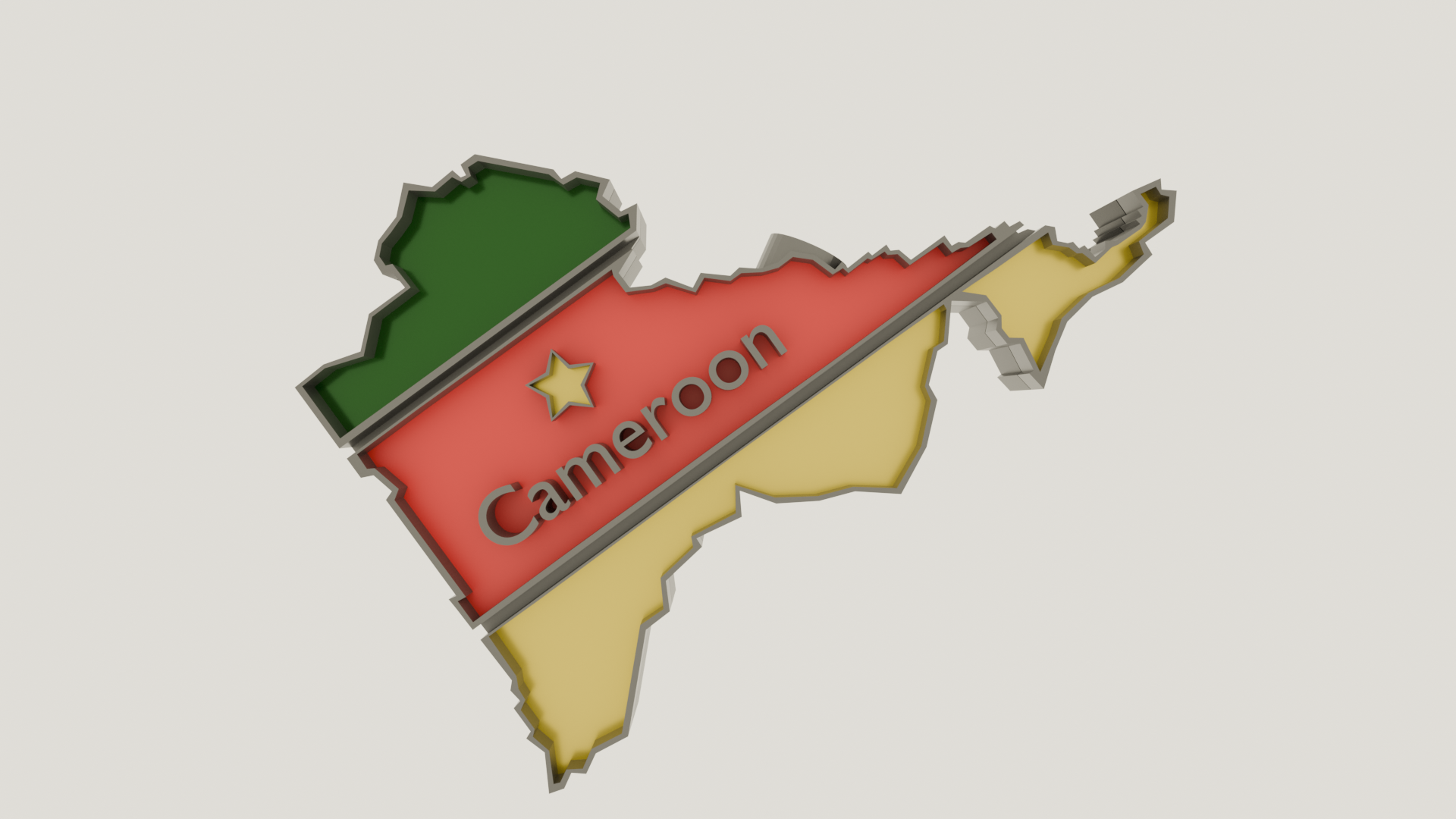
Green represents the forests of the south, red represents unity and yellow represents the northern savannas and sunshine. The central yellow star is known as the Star of Unity.
A Little History
The lands of modern Cameroon have been home to diverse societies for thousands of years. Communities developed around farming, fishing, pastoralism and regional trade, while northern Cameroon became connected to wider Sahelian and trans-Saharan trading networks.
In the north, states connected to the Kanem-Bornu Empire influenced trade and political life around the Lake Chad region. During the 19th century, Fulani-led states also became important following the expansion of the Sokoto Caliphate into parts of what is now northern Cameroon.
Along the coast, European contact increased beginning with Portuguese sailors in the 15th century. The name Cameroon ultimately comes from the Portuguese Rio dos Camarões, meaning roughly “River of Prawns,” a name given to the Wouri River because of the abundance of crustaceans encountered there.
Germany established the colony of Kamerun in 1884. Following Germany’s defeat in World War I, the territory was divided between France and Britain, with France administering the larger portion and Britain administering areas along the border with Nigeria.
French-administered Cameroon became independent on January 1, 1960, as the Republic of Cameroon. In 1961, a United Nations-organized vote was held in the British-administered territories. Northern Cameroons joined Nigeria, while Southern Cameroons joined the Republic of Cameroon, creating a federal republic.
This colonial history helps explain why both French and English are official languages in Cameroon today and why questions of language, regional identity and political representation remain significant in the country.
People & Culture
Cameroon is often described as “Africa in miniature” because of its remarkable geographic and cultural diversity. The country contains coastal regions, tropical rainforest, mountains, savanna and areas approaching the Sahel, each supporting communities with different histories and ways of life.
Cameroon is home to hundreds of ethnic and linguistic communities. These include Bamileke, Bamum, Beti, Bassa, Duala, Fulani, Tikar and many others, alongside Indigenous forest communities such as the Baka.
More than 200 local languages are spoken across the country. French and English are the official languages, reflecting the country’s colonial history, while Cameroonian Pidgin English also serves as an important means of communication in parts of the country.
Cultural traditions vary enormously by region. The western highlands are known for elaborate royal traditions, beadwork, masks and ceremonial arts, while northern communities have traditions shaped by pastoralism, Islam and centuries of Sahelian trade. Forest and coastal communities have their own distinctive ceremonies, crafts and social traditions.
Family and community remain important throughout Cameroonian society. Traditional leadership continues to have cultural significance in many areas, while festivals, dance, clothing, storytelling and craftsmanship preserve connections between generations.
Cameroon’s identity is therefore difficult to represent with a single tradition. Its character comes precisely from the coexistence of many languages, peoples, environments and histories within one country.
Food
Cameroonian cuisine is just as diverse as the country’s population. Common ingredients include plantain, cassava, cocoyam, maize, rice, beans, peanuts, vegetables, fish and meat, with cooking traditions changing considerably from one region to another.
One of Cameroon’s best-known dishes is ndolé, traditionally prepared with bitter leaves, peanuts and meat or seafood. It is particularly associated with the Duala people and is commonly served with plantain, rice or other starches.
Eru is another popular dish, especially in the country’s southwest. It combines leafy vegetables and is commonly prepared with ingredients such as palm oil, meat or dried fish and served with water fufu.
Koki, made primarily from ground black-eyed peas and palm oil and traditionally steamed in leaves, is another widely enjoyed dish. Achu, associated particularly with communities of the Northwest Region, combines pounded cocoyam with a distinctive yellow soup.
Along the coast, fresh and smoked fish are important, while northern cuisine reflects Sahelian influences and greater use of grains, livestock and dairy products.
From forest vegetables and coastal seafood to highland dishes and northern grains, Cameroonian food reflects why the country is so often described as Africa in miniature—many environments and cultural traditions brought together in one place.
Take Cameroon With You
Carry a little piece of Cameroon wherever you go. Inspired by the country’s iconic red, yellow, green and yellow star, this keychain is a small celebration of Cameroonian identity and pride.
Continue Exploring
Your journey doesn’t have to end here. Discover more stories, cultures and heritage from across Africa and the diaspora.