Discover Niger
Niger stretches from the Sahara Desert in the north to the greener Sahel in the south. Its location has connected its people to centuries of trade, migration and cultural exchange across West and North Africa.
Niger at a Glance
Capital
Abuja
Largest City
Lagos
Region
West Africa
Currency
Nigerian Naira
Independence
October 1, 1960
Official Language
English
The Meaning behind the Flag
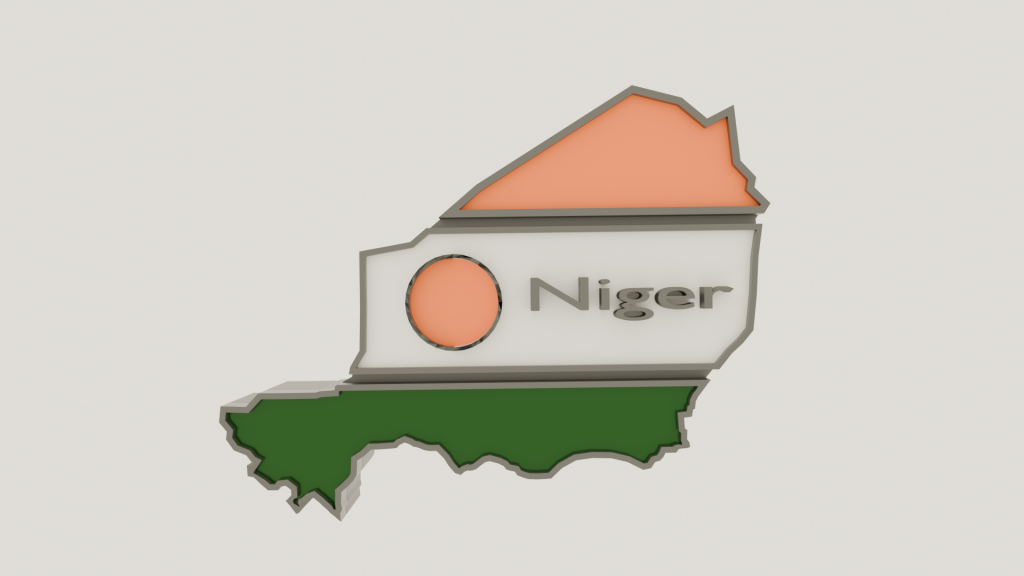
Orange represents the Sahara, white represents purity and peace, and green represents the fertile southern regions and hope. The orange circle in the centre represents the sun.
A Little History
The lands of modern Niger have been connected to some of Africa’s most important Saharan and Sahelian civilizations and trade networks for centuries. Caravan routes crossing the Sahara carried goods such as salt, gold, textiles and livestock while also spreading ideas, languages and religious traditions between North and West Africa.
Western Niger was influenced by the powerful Songhai Empire, which became one of West Africa’s largest states during the 15th and 16th centuries. The Niger River provided an important route for agriculture, settlement and trade throughout this region.
In the east, the Kanem-Bornu Empire exercised influence around the Lake Chad basin for centuries. Hausa states and trading communities also played major roles in the southern areas, while Tuareg communities established important networks and political influence across parts of the Sahara.
European colonial expansion changed the region during the late 19th and early 20th centuries. France gradually established control, and Niger eventually became a territory within French West Africa.
Nationalist movements grew during the mid-20th century as colonial rule weakened across Africa. Niger achieved full independence from France on August 3, 1960, with Hamani Diori becoming the country’s first president.
Since independence, Niger has experienced periods of civilian government, military rule and political instability. Its history and identity remain strongly connected to both the Sahara and the Sahel, reflecting centuries of movement, trade and interaction between different peoples.
People & Culture
Niger is home to a diverse population that includes Hausa, Zarma-Songhai, Tuareg, Fulani (Peul), Kanuri, Toubou and Arab communities, among others. Hausa and Zarma are widely spoken, while numerous other languages reflect the country’s cultural diversity.
Geography has had an enormous influence on life in Niger. Much of the country lies within the Sahara Desert, while the more densely populated south forms part of the Sahel. Communities have developed different ways of life suited to these environments, ranging from farming settlements to pastoral and historically nomadic societies.
The Tuareg, particularly associated with Saharan regions, are well known for traditions of pastoralism, caravan trade, metalwork and distinctive clothing. Hausa communities have long histories of commerce, agriculture and craftsmanship, while Fulani communities have strong pastoral traditions across Niger and the wider Sahel.
Family and community relationships remain central to social life. Islam is the predominant religion, and religious traditions influence celebrations, architecture and everyday customs throughout much of the country.
Craftsmanship is another important part of Nigerien cultural heritage. Leatherwork, jewelry, weaving, pottery and metalwork reflect skills that have been passed between generations and shaped by centuries of Saharan and Sahelian exchange.
Food
Nigerien cuisine reflects the country’s dry climate and agricultural traditions. Common ingredients include millet, sorghum, rice, beans, cowpeas, meat, vegetables and dairy products.
Millet is particularly important and is used to prepare porridges and dough-like staples that can be eaten with sauces or stews. Sorghum is another widely used grain, especially in areas where crops must withstand hot and relatively dry conditions.
Rice dishes are common, particularly around the Niger River, while beans and cowpeas provide an important part of many everyday meals. Stews and sauces may contain vegetables, peanuts, meat or spices and are commonly eaten alongside grains.
Livestock are important to many communities, making goat, sheep, cattle and dairy products significant in parts of the country. Pastoral communities have developed food traditions closely connected to raising animals and seasonal movement.
Food in Niger reflects the same forces that have shaped much of the country’s history: the desert, the Sahel, pastoralism, farming and centuries of trade across West and North Africa.
Take Niger With You
Carry a little piece of Niger wherever you go. Inspired by the country’s iconic orange, orange star, green and white, this keychain is a small celebration of Niger identity and pride.
Continue Exploring
Your journey doesn’t have to end here. Discover more stories, cultures and heritage from across Africa and the diaspora.