Discover Sudan
Sudan sits at a historic meeting point between the Nile Valley, the Sahara, the Sahel and the Horn of Africa. Beneath its modern story lies an ancient heritage stretching back thousands of years.
Sudan at a Glance
Capital
?
Largest City
omdurman
Region
Northeast Africa
Currency
Sudanese Pound
Independence
January 1, 1956
Official Language
Arabic & English
The Meaning behind the Flag
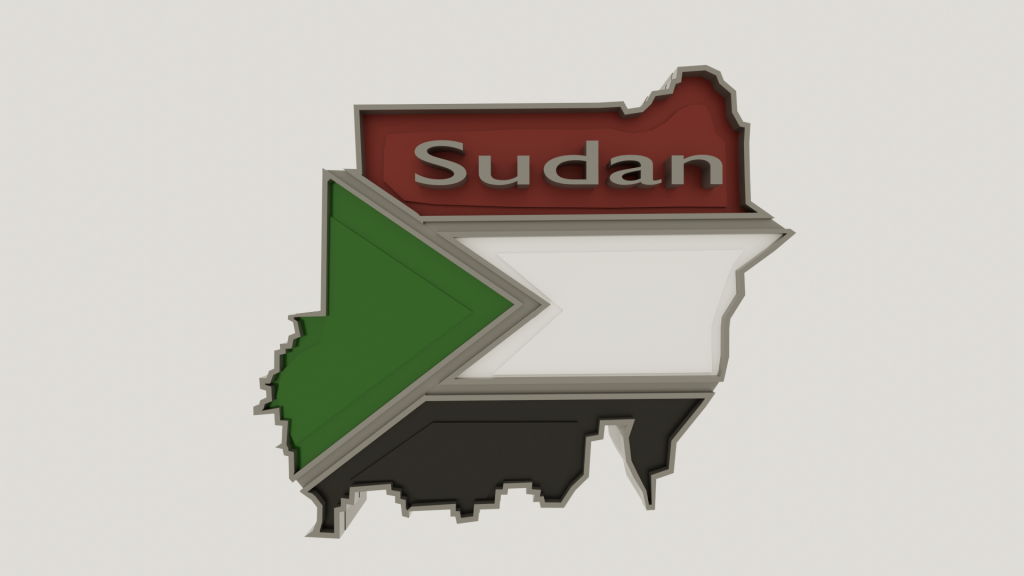
Red represents sacrifice and the struggle for independence, white represents peace and optimism, black references Sudan’s name and heritage, and green represents agriculture, prosperity and Islamic tradition.
A Little History
Sudan has one of Africa’s oldest recorded histories. Along the Nile, the ancient region of Nubia became home to powerful civilizations, including the Kingdom of Kush. Kushite kingdoms centered at places such as Kerma, Napata and later Meroë developed important traditions in trade, architecture, metalworking and agriculture. Kushite rulers even governed ancient Egypt for a period as its 25th Dynasty.
Over the centuries, Christianity became influential in several Nubian kingdoms. From the medieval period onward, Islam and Arabic gradually spread through much of the region, interacting with existing African and Nubian cultures and societies.
In the 19th century, Sudan came under Egyptian rule and later experienced the Mahdist uprising, which established an independent Mahdist state. After its defeat, Britain and Egypt jointly administered Sudan under the Anglo-Egyptian Condominium, although Britain held the dominant colonial power.
Sudan achieved independence on January 1, 1956. The decades that followed included political instability and long civil wars, particularly between the north and south. Following a referendum, South Sudan became an independent country in 2011. Sudan has continued to face major political upheaval and conflict in the years since.
People & Culture
Sudan is a culturally diverse country with Arab, Nubian, Beja, Fur and many other communities, each contributing distinct languages, customs and traditions. Arabic is widely spoken, alongside numerous Nubian and other African languages.
The Nile has shaped Sudanese civilization for thousands of years. Communities developed around its water, agriculture and trade routes, and it remains central to life in much of the country.
Family and community relationships are particularly important in Sudanese society. Hospitality is a strong cultural tradition, with guests commonly welcomed with food, tea or coffee. Weddings, religious celebrations, storytelling, poetry, clothing and traditional crafts also reflect the country’s diverse cultural heritage.
Sudanese identity has developed at a crossroads between North Africa, the Sahel, the Nile Valley, the Red Sea and sub-Saharan Africa, producing a cultural heritage that cannot be reduced simply to either “African” or “Arab” traditions.
Food
Sudanese cuisine reflects the country’s position between North Africa, the Middle East and sub-Saharan Africa. Common ingredients include sorghum, millet, wheat, beans, meat, vegetables, sesame and peanuts, with regional differences across the country.
One traditional staple is kisra, a thin fermented sorghum flatbread commonly eaten with stews and sauces. Asida, a thick porridge-like dish made from flour, is another longstanding staple and can be served alongside savoury sauces.
Ful medames, made from cooked fava beans and often seasoned with oil, onions, tomatoes or other accompaniments, is a popular everyday food. Meat dishes, stews and grilled foods are also common, while sesame and peanut-based sauces appear in various regional cuisines.
Tea and coffee are important parts of Sudanese hospitality and social life. Meals are often shared communally, making food not only a source of nourishment but also an important way of welcoming guests and bringing families and communities together.
Take Sudan With You
Carry a little piece of Sudan wherever you go. Inspired by the country’s iconic red, black. green and white, this keychain is a small celebration of Sudanese identity and pride.
Continue Exploring
Your journey doesn’t have to end here. Discover more stories, cultures and heritage from across Africa and the diaspora.